Embroidered Patches vs PVC Patches: Which Lasts Longer?
When choosing custom patches, durability is often the deciding factor. You want something that holds its shape, keeps its colour, and still looks good after months or even years of use. Two of the most popular options in the UK are embroidered patches and PVC patches, but they perform very differently over time.
In this guide, we will look closely at how long embroidered patches and PVC patches really last, what affects their lifespan, and which option makes the most sense for your specific use. This is part one, where we cover the basics and set up a clear durability comparison.

Why Patch Durability Matters
Not all patches are worn in the same way. A patch stitched onto a fashion jacket has very different demands compared to one fixed to a tactical vest or work uniform.
Durability affects more than just how long a patch lasts. It also impacts how often it needs replacing, how it looks after repeated use, and whether it still represents your brand or organisation properly.
If you are ordering custom patches for staff uniforms, clubs, military units, or merchandise, lifespan quickly becomes a cost and quality issue, not just a design choice.
What Are Embroidered Patches?
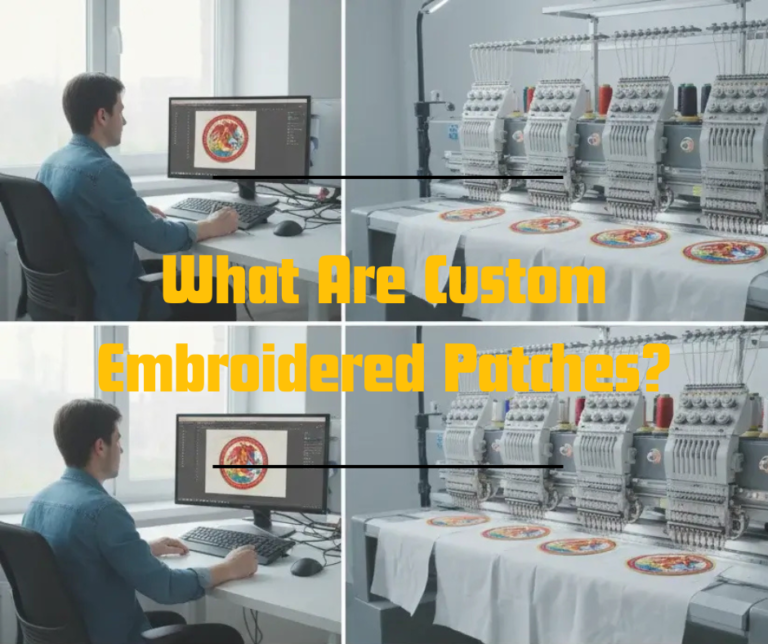
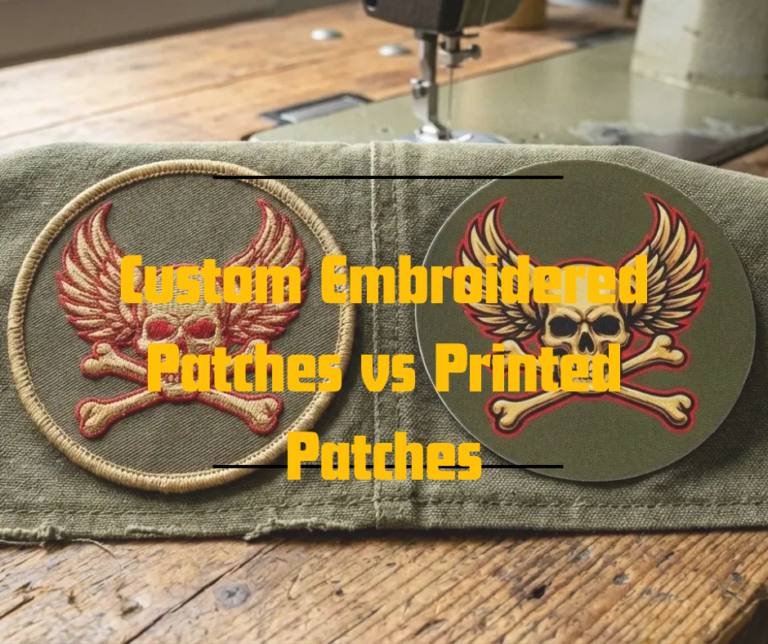
Embroidered patches are the most traditional and widely recognised patch style. They are created by stitching coloured threads onto a fabric backing, usually twill, using industrial embroidery machines.
If your starting point is classic stitched patches, this is the same category you will find on our Custom Embroidered Patches UK page, which covers the full range of embroidery styles and finishes.
How Embroidered Patches Are Made
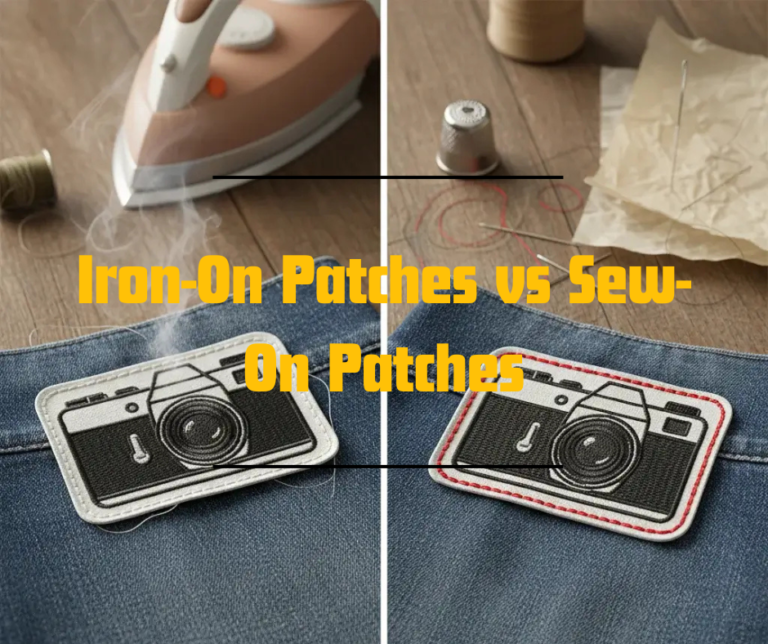
The process involves digitising your artwork, then stitching the design using high-quality embroidery thread. The patch is finished with a border, often merrowed or heat cut, and paired with a backing such as sew-on, iron-on, or Velcro.
The final result is flexible, textured, and well-suited to garments.
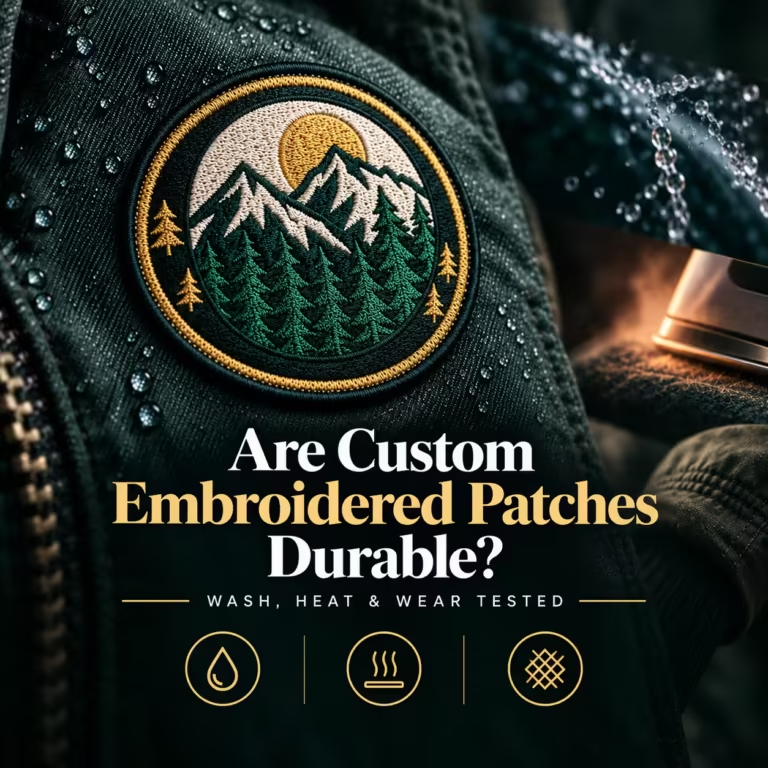
Strengths of Embroidered Patches
Embroidered patches have several durability advantages when used correctly:
- Strong thread holds up well to normal wear
- Flexible fabric moves naturally with clothing
- Stitching resists cracking or splitting
- Ideal for jackets, hoodies, hats, and bags
They also age in a way many people like. Light wear can add character rather than making the patch look damaged.
Limitations of Embroidered Patches
Despite their popularity, embroidered patches do have limits when pushed into tougher environments:
- Threads can fray with heavy abrasion
- Colours may fade after frequent washing
- Moisture can affect fabric over time
- Fine details can soften with long-term use
This does not mean embroidered patches are fragile, but they are better suited to everyday wear rather than harsh exposure.
What Are PVC Patches?
PVC patches are made from soft, flexible rubber rather than fabric and thread. They are moulded rather than stitched, which gives them very different durability characteristics.
If your use case involves outdoor gear or demanding conditions, PVC patches are often considered because of their toughness and weather resistance.
How PVC Patches Are Made
PVC patches are created using moulds that form the design in layers of coloured rubber. Each detail is sealed into the patch itself, rather than sitting on the surface like embroidery thread.
Edges are smooth and fully enclosed, which plays a big role in how long these patches last.
You can see examples of this style on our custom PVC patches page, which focuses on rubber patches for practical and tactical use.
Strengths of PVC Patches
PVC patches are built with durability in mind:
- Fully waterproof and weather-resistant
- No threads to fray or pull loose
- Resistant to mud, sweat, and oils
- Easy to wipe clean
- Holds shape under heavy use
They are commonly used on military gear, police uniforms, outdoor equipment, and workwear where exposure is unavoidable.
Limitations of PVC Patches
PVC patches are tough, but they are not perfect for every application:
- Heavier than embroidered patches
- Less breathable on clothing
- Not ideal for thin or delicate fabrics
- A more modern look that may not suit all brands
In terms of raw lifespan, they are hard to beat, but comfort and style still matter depending on where the patch is worn.
Embroidered vs PVC Patches: Early Durability Comparison
At a basic level, the difference in longevity comes down to materials.
Embroidered patches rely on thread and fabric, which naturally wear over time. PVC patches rely on moulded rubber, which resists wear, moisture, and friction far more effectively.
That said, durability is not just about material strength. Washing habits, exposure to weather, placement on the garment, and backing type all influence how long a patch will last.
In part two, we will break this down further by comparing washing resistance, outdoor exposure, abrasion, long-term appearance, and real-world use cases so you can confidently choose the right option.
Embroidered vs PVC Patches: Real-World Durability Comparison
Now that we have covered how each patch type is made, let’s look at how they perform once they are actually worn, washed, and exposed to everyday use. This is where the differences in lifespan become much clearer.
Resistance to Washing
Washing is one of the biggest factors affecting patch longevity.
Embroidered patches generally cope well with occasional machine washing, especially when sewn on rather than ironed. However, frequent washing at high temperatures can cause thread colours to fade and stitching to soften over time. Tumble drying can also speed up wear.
PVC patches perform far better here. They are waterproof and do not absorb detergent or moisture. Washing does not affect colour, shape, or texture, and they can simply be wiped clean if needed. For uniforms or workwear that are washed often, PVC patches have a clear advantage.
Weather and Moisture Exposure
If a patch is regularly exposed to rain, damp conditions, or sweat, material choice matters.
Embroidered patches can handle light moisture, but repeated exposure to rain or humidity may eventually affect the fabric backing and thread. Over long periods, this can lead to stiffness or mild discolouration.
PVC patches are designed for exactly these conditions. They are fully weatherproof and unaffected by rain, mud, or humidity. This is why they are commonly used for outdoor gear and uniforms, including applications where Custom Military / Tactical / Police / Morale Patches UK are required.
Abrasion and Daily Wear
Patches placed on areas that rub frequently, such as shoulders, sleeves, backpacks, or tactical vests, take more punishment.
With embroidered patches, constant friction can cause threads to flatten, fuzz, or fray at the edges. This happens slowly, but it does happen.
PVC patches resist abrasion much more effectively. There are no threads to catch or pull, and the smooth rubber surface holds up well against repeated contact with other materials.
Shape and Edge Retention
Over time, edges tell the story of a patch’s lifespan.
Embroidered patches can show edge wear, especially if they are heat cut or ironed on. Merrowed borders help, but they still rely on thread.
PVC patches keep their shape for far longer. The sealed rubber edges do not fray or soften, which helps them maintain a clean, sharp look even after years of use.
Which Patch Lasts Longer in Practice? If we are talking purely about material lifespan, PVC patches last longer than embroidered patches in most demanding environments.
That does not mean embroidered patches are short-lived. When used on clothing, fashion items, and casual wear, they can last for years and still look good. The key difference is how they respond to stress.
Best Choice for Clothing and Fashion
For jackets, hats, hoodies, and bags worn day to day, embroidered patches are often the better option. They are lighter, more comfortable, and visually suit fabric garments.
They also integrate well with different backing options, including sew-on, iron-on, and custom velcro patches for removable designs.
Best Choice for Outdoor and Tactical Use
For uniforms, outdoor gear, and heavy-duty use, PVC patches are the clear winner. They last longer, stay cleaner, and maintain their appearance despite harsh conditions.
This makes them ideal for security teams, emergency services, and anyone who needs a patch that simply does not give up.
Longevity vs Appearance Trade-Off
The real choice is not just about which patch lasts longer, but which one lasts longer in the way you need it to.
Embroidered patches offer warmth, tradition, and texture. PVC patches offer strength, resilience, and practicality.
Cost vs Longevity Considerations
Embroidered patches are often slightly cheaper upfront, especially for simple designs. PVC patches may cost more initially due to moulding, but their longer lifespan can offer better value over time.
If you expect to replace patches frequently due to wear, PVC can be more cost-effective in the long run. If the patch is mainly decorative, embroidery remains a solid choice.
FAQs About Embroidered and PVC Patches
Do embroidered patches wear out faster than PVC patches?
Yes, in harsh or outdoor conditions. In everyday clothing use, embroidered patches can still last a very long time.
Are PVC patches suitable for everyday clothing?
They can be, but they are heavier and less breathable. They are better suited to outerwear and gear rather than lightweight garments.
Which patch type is better for uniforms?
PVC patches generally last longer on uniforms, especially those exposed to frequent washing and outdoor use.
Can both patch types be made with Velcro backing?
Yes. Both embroidered and PVC patches can be supplied with Velcro for easy removal and replacement.
Do PVC patches fade over time?
PVC patches are very resistant to fading and usually keep their colour far longer than embroidered threads.
Final Verdict: Which Patch Lasts Longer?
If durability is your top priority, PVC patches last longer overall. They outperform embroidered patches in washing, weather resistance, abrasion, and shape retention.
However, embroidered patches still offer excellent longevity for clothing, branding, and everyday wear, while delivering a classic look many people prefer.
The best choice depends on how and where the patch will be used. If you are unsure, choosing the right patch type from the start can save time and money later.
If you need help deciding, take a look at our range of patch options or get in touch for tailored advice based on your design and usage needs.