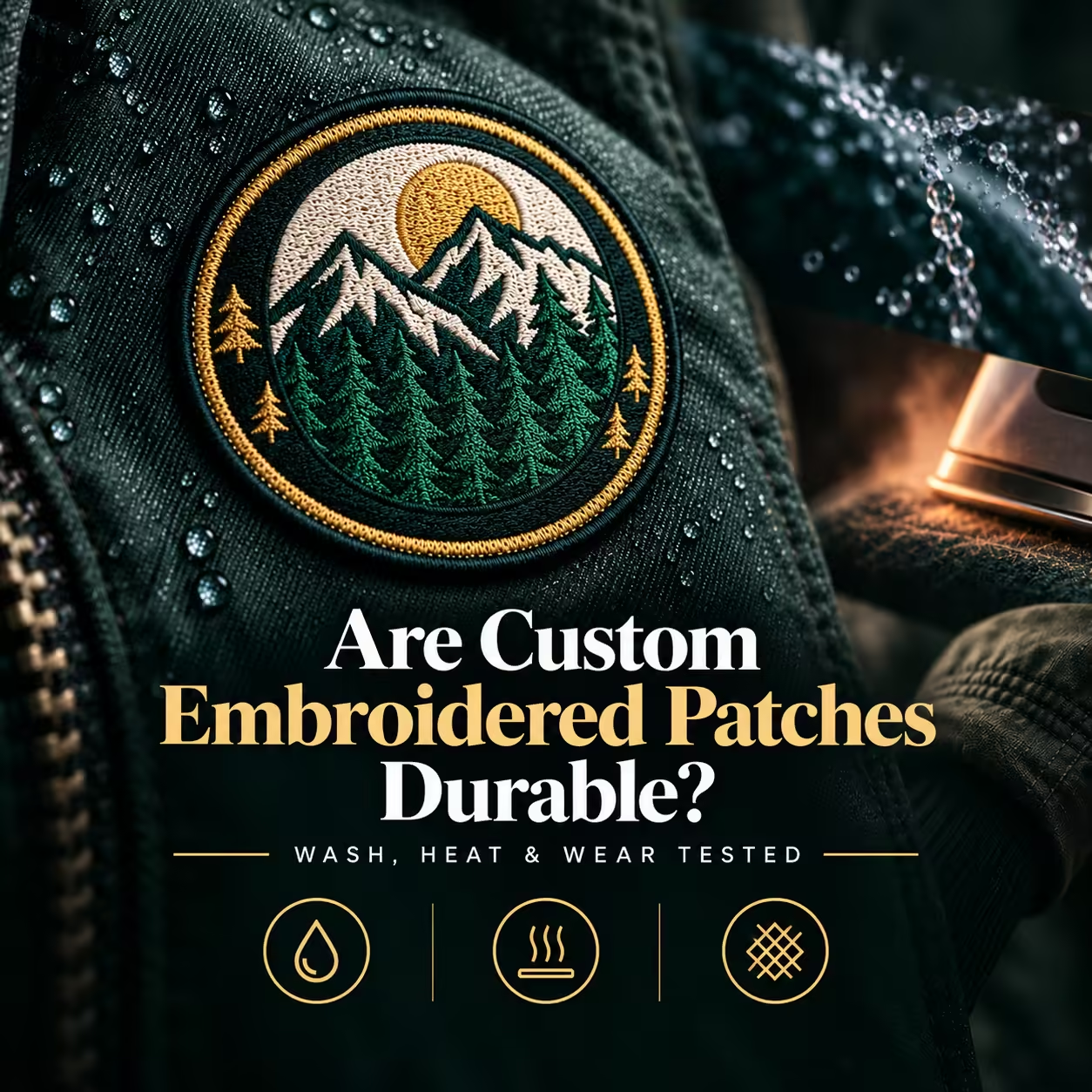
Are Custom Embroidered Patches Durable? (Wash, Heat & Wear Tested)
Why durability matters more than most people think
When you invest in custom patches, you are not just paying for how they look on day one. You are paying for how they hold up after months of washing, ironing, daily wear and exposure to the British weather. Whether patches are used on workwear, uniforms, club jackets, backpacks or fashion items, durability is often the deciding factor between a patch that lasts years and one that starts fraying after a few washes.
This is where Custom Embroidered Patches UK really stand out. Embroidery has long been trusted for strength, texture and longevity, but how durable are embroidered patches in real life when tested against washing, heat and everyday wear? Let’s break it down properly.
What actually makes an embroidered patch durable?
Not all embroidered patches are made the same. Durability depends on a few key construction elements that work together.
Thread quality and stitch density
The thread used in embroidery plays a major role in how long a patch lasts. High-quality polyester embroidery thread is commonly used because it resists fading, handles moisture well and stays strong even after repeated washing. Cheaper threads can look fine at first, but may weaken or lose colour over time.
Stitch density also matters. A well-digitised design uses enough stitches to fully cover the fabric base without gaps. This creates a tight, compact surface that is far less likely to fray or pull loose. Dense stitching protects the design from abrasion and helps the patch keep its shape after heavy use.
Base fabric and overall construction
Most durable embroidered patches use a strong twill base. Twill fabric provides structure and flexibility at the same time, which is ideal for garments that bend and move. Compared to felt, twill is far more resistant to tearing and edge wear.
Edge finishing is another important factor. A merrowed edge, which is the stitched border you see around many patches, helps seal the edges and prevents fraying. This is especially useful for patches sewn onto jackets, bags and uniforms that experience constant movement.
How do embroidered patches hold up in the wash?
Washing is where many patches fail, but embroidery generally performs very well when made properly.
Machine washing versus hand washing
Embroidered patches can safely go through a washing machine when attached correctly. Cold or warm washes are ideal, especially for everyday clothing and uniforms. The stitching does not crack or peel because it is thread-based rather than printed on the surface.
Hand washing is even gentler and can extend the life of both the patch and the garment. This is often recommended for fashion pieces or special items, but it is not essential for most workwear or casual clothing.
Will embroidered patches shrink or fade?
High-quality embroidered patches are made using pre-shrunk fabrics and colourfast threads. This means they are unlikely to shrink or bleed colour during washing. Fading is minimal even after repeated cycles, especially when compared to some printed patch options.
This is one reason embroidered patches are commonly chosen for uniforms and branded clothing that need to look consistent over time. If long-term appearance matters, embroidery has a clear advantage.
Heat resistance: ironing, tumble drying and heat exposure
Heat is another common concern, particularly for iron-on application and regular garment care.
Can you iron over embroidered patches?
Yes, but with care. Embroidered patches can handle moderate heat, but direct contact with a hot iron is not recommended. Using a pressing cloth or ironing from the reverse side protects the stitching and prevents flattening or shine on the threads.
The embroidery itself does not melt or crack like some printed designs. This makes it more forgiving if heat is applied briefly by mistake.
What about tumble dryers and heat press machines?
Tumble drying on low heat is usually safe for embroidered patches, though air drying is always better for long-term care. Industrial heat press machines, often used in uniform production, work well with embroidery when the correct temperatures are used.
Compared to alternatives like custom printed patches, embroidery handles heat far better and maintains its structure and texture over time.
Everyday wear and tear: real-world performance
Durability is not just about washing and heat. Daily friction and movement test patches constantly.
Friction, movement and frequent use
Embroidered patches perform extremely well in high-friction areas such as shoulders, sleeves, backpacks and outerwear. The raised stitching absorbs abrasion gradually rather than failing suddenly. There is no surface layer to crack or peel away.
This makes embroidery ideal for items that are worn daily, handled often or exposed to rough conditions.
Outdoor and uniform use
For outdoor clothing, workwear and uniforms, embroidered patches offer reliable performance in rain, cold and variable temperatures. They dry quickly and retain their shape even when exposed to moisture.
This is why embroidery is widely used on tactical gear, service uniforms and morale patches, where durability is essential rather than optional.
Backings, Lifespan, Comparisons and Final Verdict
Does the backing type affect durability?
The backing you choose has a big impact on how long your embroidered patch lasts, especially once it is attached to clothing or equipment.
Sew-on backing for long-term strength
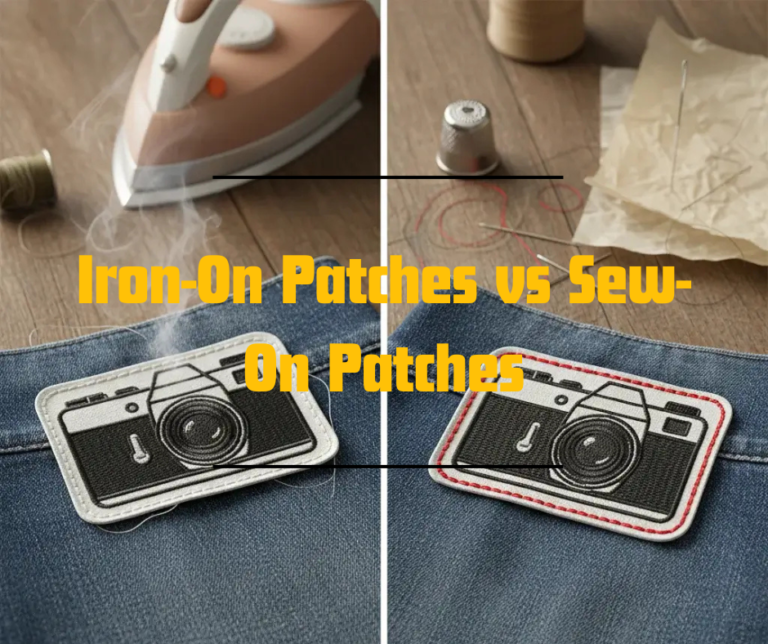
Sew-on backing is the most durable option overall. When a patch is stitched directly onto a garment, it becomes part of the fabric rather than something sitting on top of it. This method handles frequent washing, heavy movement and long-term wear very well.
For workwear, uniforms, jackets and bags, sew-on embroidered patches are often the best choice. They stay secure and rarely need replacing if sewn properly.
Iron-on backing for convenience
Iron-on backing is popular because it is quick and easy to apply. When applied using the correct heat and pressure, it can last well through regular use and washing. However, over time and with repeated heat exposure, the adhesive can weaken.
Many customers choose iron-on patches for casual wear and then reinforce them with a few stitches around the edge. If ease of application matters, custom iron-on patches are a practical option when used correctly.
Velcro backing for removable patches
Velcro backing is designed for patches that need to be removed or swapped regularly. It is commonly used on uniforms, tactical gear and bags. The embroidery itself remains durable, but the lifespan depends on the quality of the hook-and-loop fastener.
For applications where flexibility matters more than permanent attachment, custom velcro patches work very well.
How long do custom embroidered patches last?
With proper materials and application, embroidered patches can last several years. On casual clothing, they often outlast the garment itself. On uniforms and workwear, they can maintain their appearance through dozens of wash cycles.
The lifespan depends on:
- Stitch quality and thread type
- Backing and attachment method
- Frequency of washing and drying
- Level of friction and exposure
Compared to many other patch types, embroidery offers one of the best balances between durability, appearance and long-term value.
How to make embroidered patches last even longer
A few simple care habits can significantly extend the life of your patches.
Washing and care tips
- Wash garments inside out where possible
- Use cold or warm water rather than hot water
- Avoid harsh detergents and bleach
- Air dry when you can or tumble dry on low heat
Application tips
- Sew patches for maximum durability
- If using iron-on, apply firm pressure and allow full cooling
- Avoid repeated direct ironing over the embroidery
These small steps help preserve both the stitching and the garment underneath.
Are embroidered patches more durable than other patch types?
This is a common question, especially for businesses comparing options.
Embroidered vs printed patches
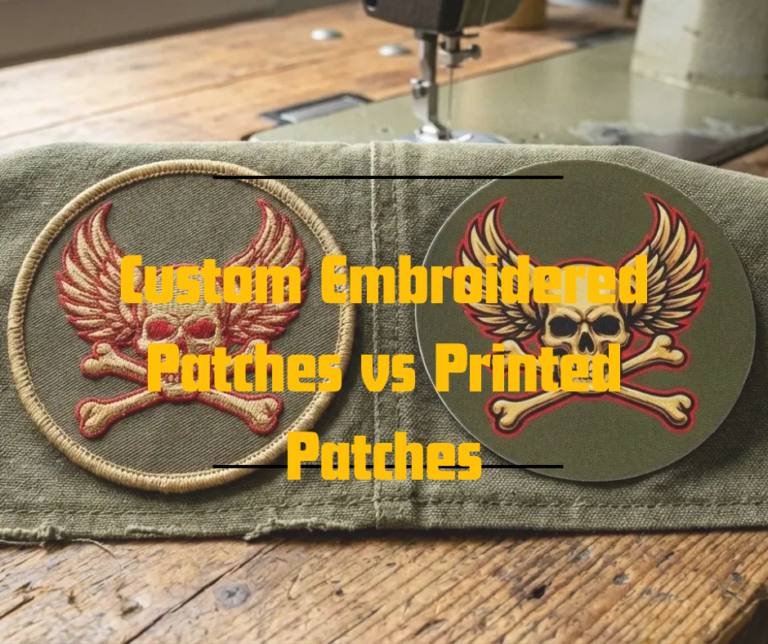
Printed patches can be very detailed, but the print sits on the surface. Over time, it may fade, crack or peel. Embroidery uses thread, which wears gradually and keeps its structure.
For long-term use, embroidery is usually more durable than printed patches.
Embroidered vs woven patches
Woven patches use thinner threads woven into the fabric. They are great for fine detail but generally flatter and less robust than embroidery. Embroidered patches are better suited to heavy wear and textured designs.
Embroidered vs PVC patches
PVC patches are waterproof and tough, but they are less flexible and can feel rigid on clothing. Embroidered patches offer better comfort and a more traditional look while still delivering excellent durability. For extreme environments, custom PVC patches may be suitable, but for everyday wear, embroidery remains a strong choice.
Frequently asked questions about embroidered patch durability
Are embroidered patches waterproof?
They are water-resistant rather than fully waterproof. They handle rain well and dry quickly, but are not sealed like PVC.
Can embroidered patches survive tumble drying?
Yes, on low heat. High heat over long periods can reduce lifespan.
Do embroidered patches peel or crack?
No. Because they are stitched, there is nothing to peel or crack.
Are embroidered patches suitable for work uniforms?
Yes. They are widely used on workwear due to their strength and professional appearance.
Which backing lasts the longest?
Sew-on backing offers the longest lifespan overall.
Final thoughts: Are custom embroidered patches worth it?
If durability matters to you, custom embroidered patches are a reliable choice. They perform well under washing, heat and daily wear, and they maintain their look far longer than many alternatives. For businesses, clubs and individuals who want patches that last, embroidery delivers consistent value.
Choosing the right backing, applying patches correctly and following simple care advice make a noticeable difference. If you want patches that look good today and still look good years down the line, embroidered patches are well worth considering.
If you are planning a project and want guidance on materials or backing options, take a look at your patch choices or get in touch for tailored advice.